Starch-Molded Gummies: A Buyer’s Guide to Shapes, Sampling & Large-Volume Orders
Planning a larger gummy order? Review MITEYO’s approximate one-tonne input requirement, shape options, formula fit and sample checks.
 Start a project ↗
Planning a larger gummy order? Review MITEYO’s approximate one-tonne input requirement, shape options, formula fit and sample checks.
For a brand planning a larger gummy order, shape is only the beginning. The right production route also needs to fit the formula, target piece weight, texture and purchasing volume. MITEYO offers starch molding for larger-volume gummy projects, with approximately one metric tonne of input material required per run. This is a production input requirement, not a promise of one tonne of packed finished gummies.
This guide explains what to prepare before requesting a quotation and what to confirm before moving from a shape concept to a production specification.
Start with the volume you can realistically plan. An established range, a coordinated launch or a larger replenishment program may be a better starting point for this route than a small market test. Share your expected order, launch schedule and packaging format so the team can review production fit.
MITEYO’s approximate one-tonne input requirement applies to this starch-molding program. It is separate from the standard gummy programs advertised from 500 bottles. Do not assume that the same minimum applies to every formula or manufacturing route.
Ask the quotation to distinguish input material, expected saleable output, pieces per bottle and packed units. Confirm the expected yield and final unit count for your own project rather than converting input weight directly into a bottle quantity.
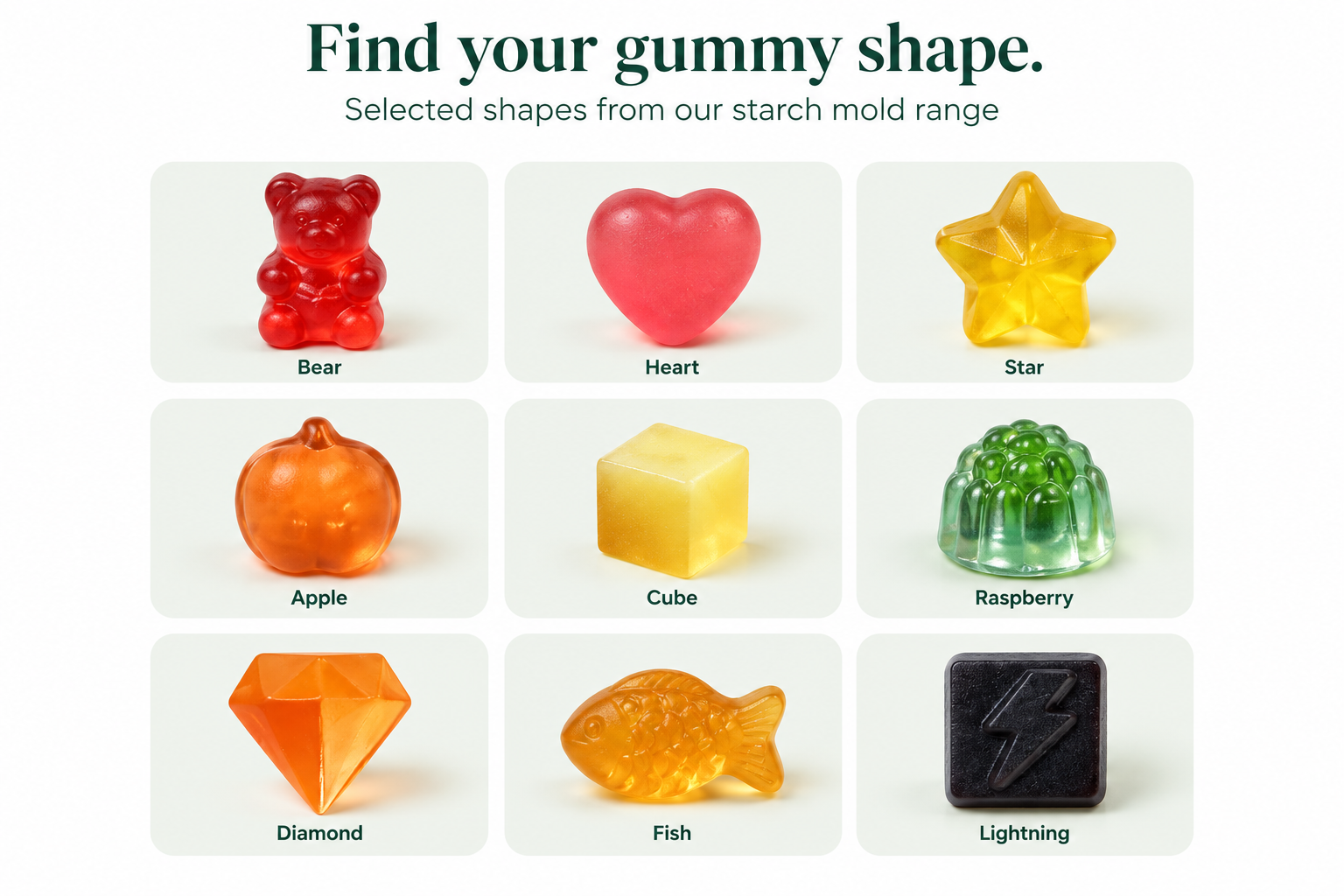
Available examples include bears, hearts, stars, apples, cubes, raspberry-style shapes and geometric designs. Existing tooling gives buyers a concrete starting point for a product brief. Choose a shape that suits your brand, then review whether its reference size works with the intended formulation.
A mould’s reference gram weight is not an active-ingredient dose. Ingredient loading, the target serving and the number of gummies per serving need their own review. Final piece weight, color, texture and surface finish should be agreed using project-specific samples.
The cover illustration presents selected shape concepts based on the supplied mould catalogue. It does not replace an approved physical sample or establish an exact production tolerance.
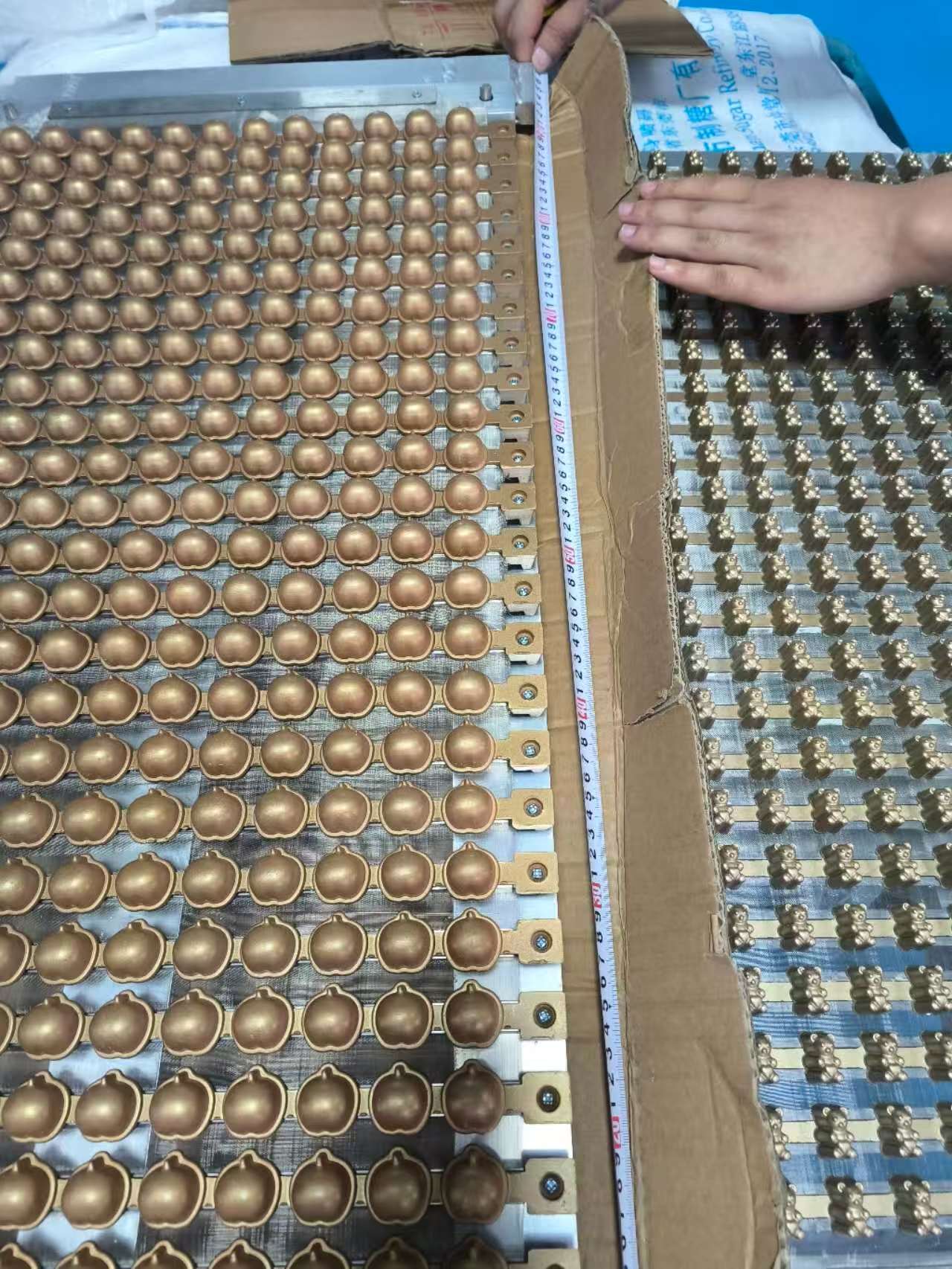
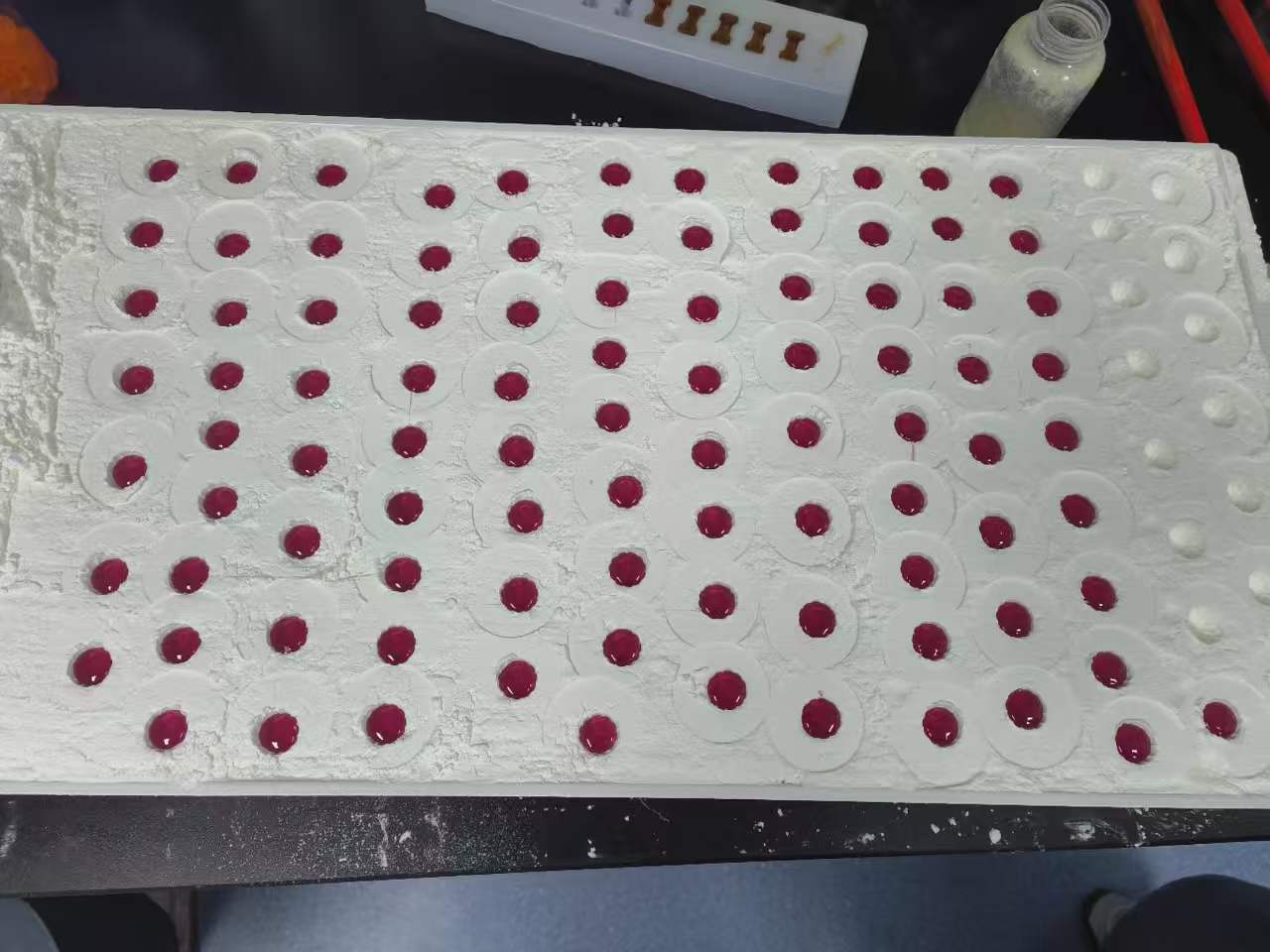
MITEYO’s starch-molding discussion focuses on clear forming, shape integrity and release performance. Turn those priorities into an agreed sample review: look at the contour, small details, surface appearance, texture and piece-weight consistency.
Good forming is not evidence of active-ingredient stability or shelf life. Ask separately which testing and storage assessment apply to your formulation and final packaging.
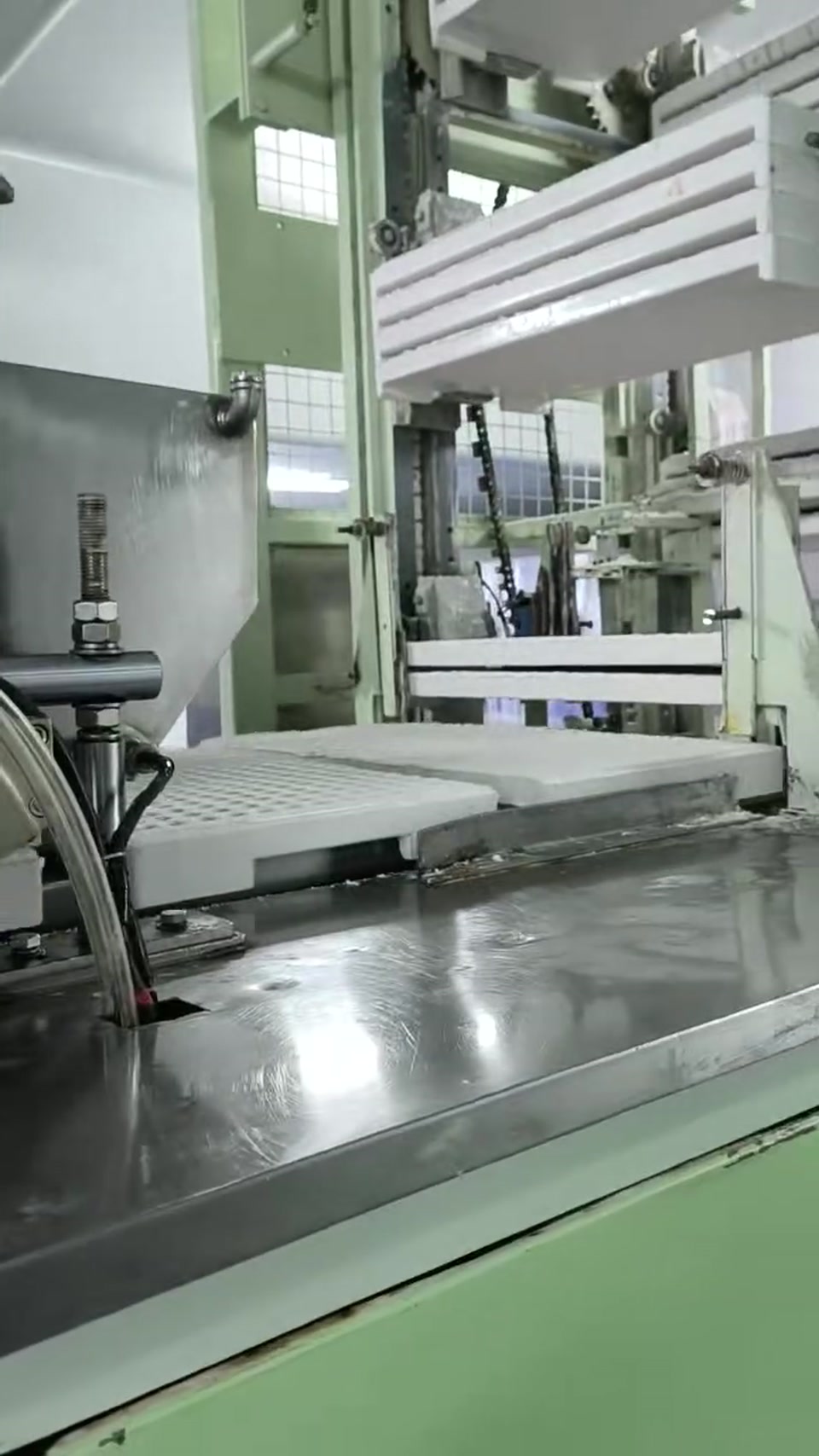
Real production footage helps buyers understand the equipment and tray handling behind the process. Use it alongside the actual tooling photographs, your samples and the proposed manufacturing specification.
Watch the supplied production video → Explore the Starch Molds production module →
With these details, the discussion can move from a general capability question to a review of formula fit, available shapes, sampling and production planning.
No. Approximately one metric tonne refers to the input material requirement for MITEYO’s starch-molding program. Saleable output and packed quantities must be confirmed for the project.
Do not assume so. The standard gummy offer and the starch-molding program have different production requirements. Share your volume for a route-specific review.
No. Shape and reference piece weight are starting points. The formula, active loading and serving size need separate assessment and sample confirmation.
No. Shape integrity and release performance are different from ingredient stability and shelf life. Confirm applicable testing and packaging requirements separately.
Explore the Starch Molds capability module or send MITEYO your formula, preferred shape and order estimate for a project review.