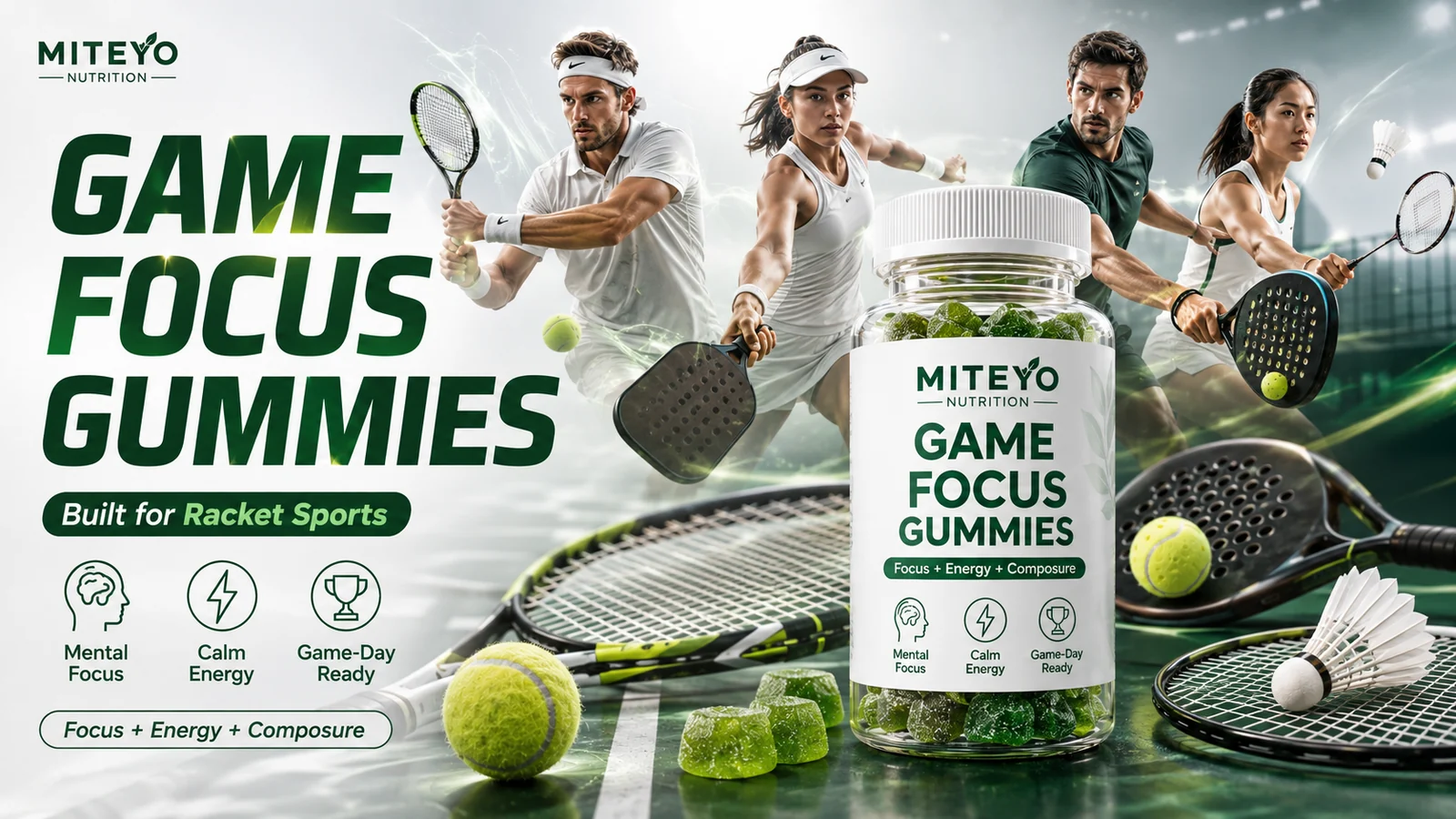
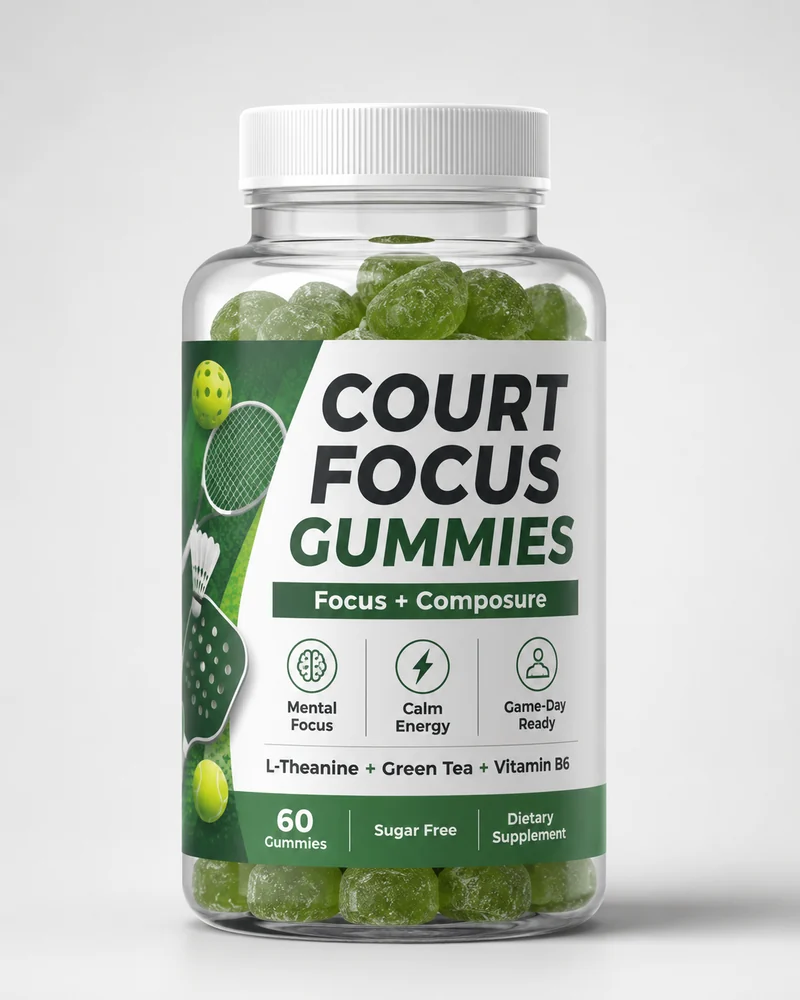
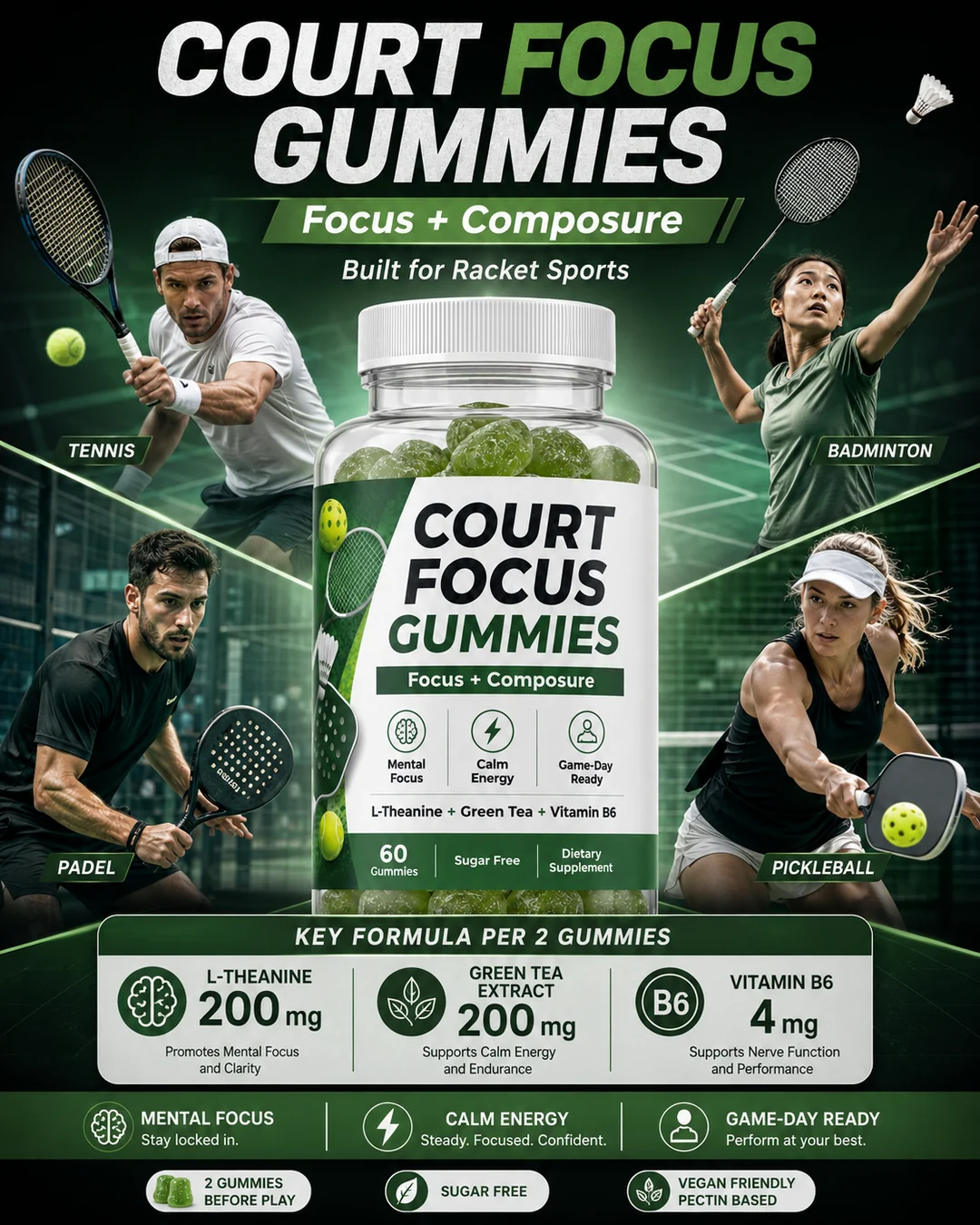
Focus Gummies for Racket Sports: Formulating Mental Performance Nutrition for Tennis, Pickleball, Padel & Badminton
Physical conditioning is only one part of racket-sport performance.
Tennis, pickleball, padel and badminton all require athletes to repeatedly process visual information, anticipate an opponent's next movement, make rapid tactical decisions and maintain concentration through long rallies or extended matches.
This creates an increasingly interesting opportunity for sports nutrition brands:
nutrition designed not only for physical energy, but also for mental readiness and sustained focus.
One emerging format is the sports focus gummy — a convenient pre-game supplement designed around ingredients associated with alertness, focus and balanced energy.
For supplement brands developing products for racket-sport consumers, the challenge is not simply putting caffeine into a gummy.
The formulation must balance:
-
alertness
-
focus
-
stimulant intensity
-
flavor
-
gummy texture
-
active ingredient loading
-
serving size
-
consumer experience
This article explains how a racket-sports focus gummy can be developed and what brands should consider before bringing one to market.
Why Mental Performance Matters in Racket Sports
Racket sports are unusually demanding from a cognitive perspective.
A player may have only fractions of a second to interpret:
-
ball trajectory
-
opponent positioning
-
spin
-
speed
-
court position
-
shot selection
-
tactical risk
That makes mental readiness different from simply having more physical energy.
For example, a player who feels highly stimulated but mentally unsettled may not necessarily perform better.
This is why a formulation positioned around:
Focus + Energy + Composure
can create a more differentiated product concept than another conventional high-stimulant pre-workout.
Different Racket Sports, Similar Mental Demands
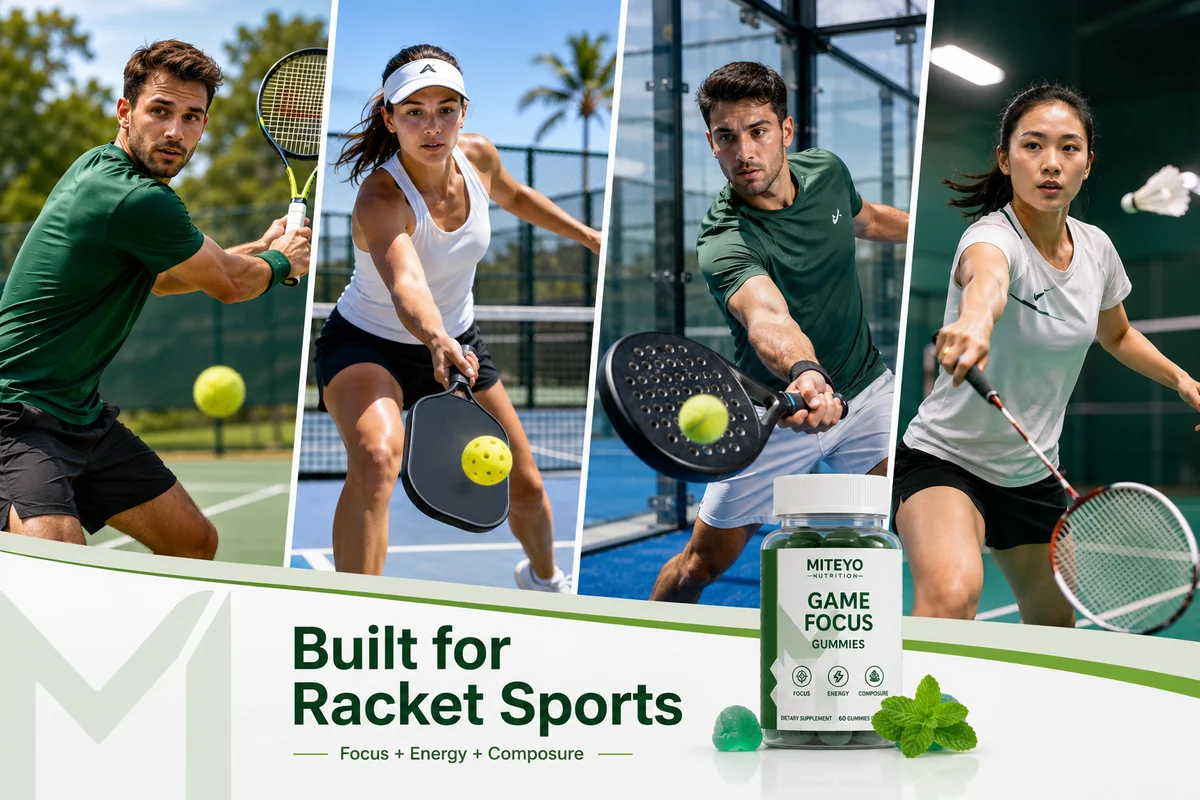
Although tennis, pickleball, padel and badminton are different sports, they share several performance characteristics.
| Sport | Typical Mental Demands |
|---|
| Tennis | Long-match concentration, tactical decisions, anticipation |
| Pickleball | Fast exchanges, reaction, placement, shot selection |
| Padel | Rapid partner coordination, court positioning, decision-making |
| Badminton | High-speed visual tracking, anticipation and reaction |
| Table Tennis | Extremely rapid information processing and precision |
This makes a general Racket Sports Focus concept commercially more scalable than developing a product exclusively for one sport.
A brand can therefore position the same core formulation across several consumer communities while adjusting imagery and marketing messages by channel.
From “Energy Gummy” to “Mental Performance Gummy”
Traditional sports-energy products frequently depend heavily on caffeine.
That can work, but higher stimulant levels are not always desirable for every consumer or every sport.
For racket sports, an alternative formulation strategy is:
enough stimulation to support alertness, combined with ingredients designed around a smoother focus experience.
Instead of positioning the product as:
MORE ENERGY
the concept becomes:
Stay Sharp. Stay Composed. Stay in the Game.
This gives brands a more specific consumer proposition.
Example Focus Gummy Formulation
A concept formulation could use the following active ingredients.
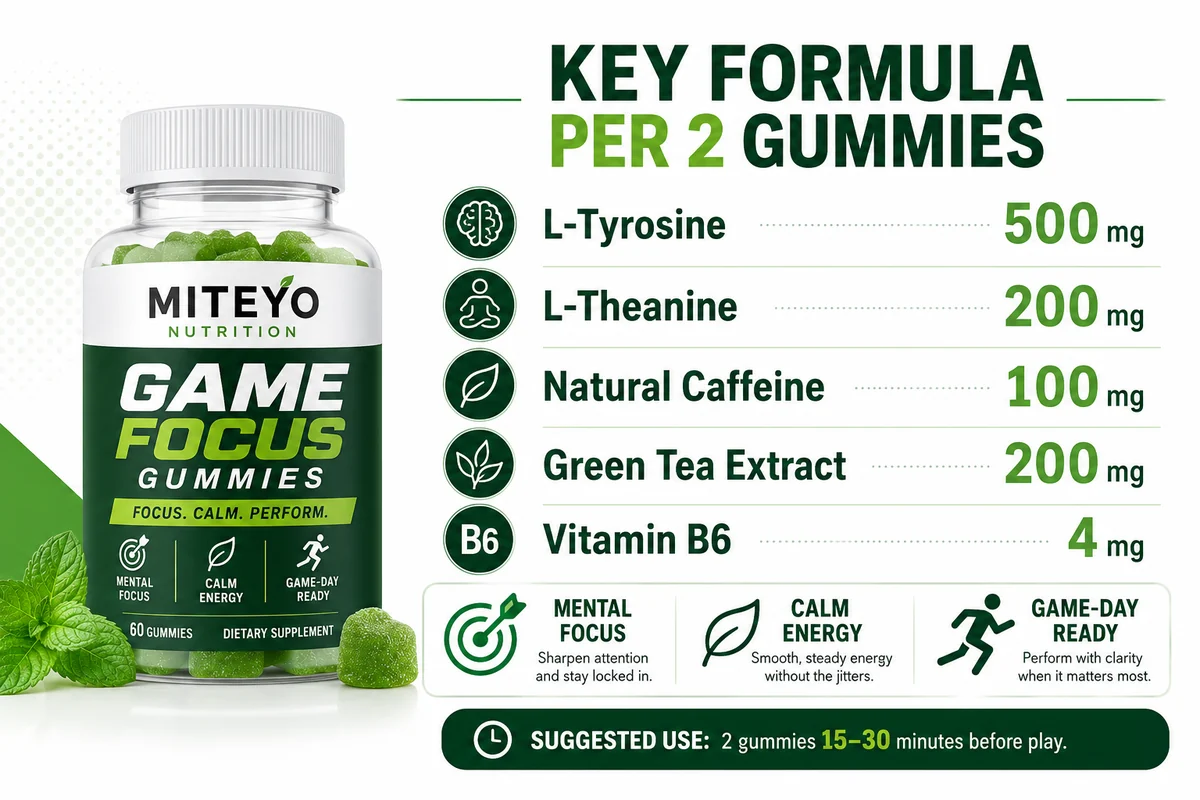
Example Formula — Per Serving
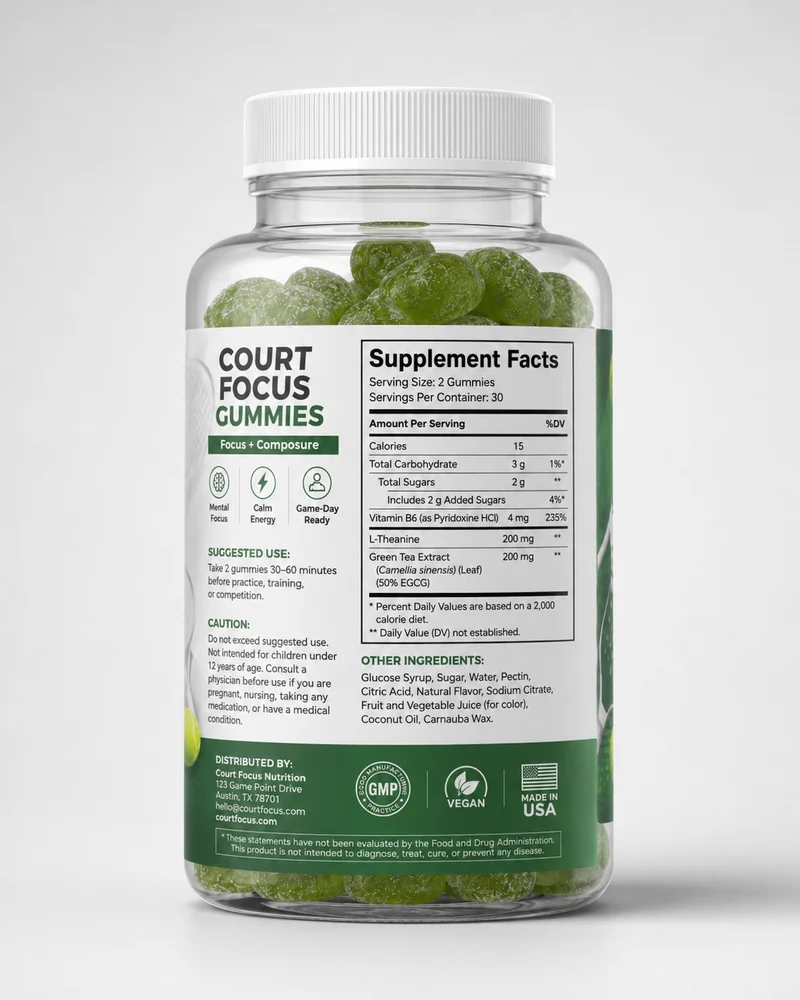
Serving Size: 2 Gummies
| Ingredient | Example Amount | Formulation Role |
|---|
| L-Tyrosine | 500 mg | Focus-oriented amino acid |
| L-Theanine | 200 mg | Balanced-focus positioning |
| Natural Caffeine | 75–100 mg | Alertness and energy |
| Green Tea Extract | 100–200 mg | Botanical / natural-energy positioning |
| Vitamin B6 | 2–4 mg | Supports normal energy metabolism |
These amounts should be treated as a product-development concept, not automatically as the final commercial formula.
Final dosage depends on:
-
target market
-
regulatory classification
-
ingredient specifications
-
gummy size
-
active loading
-
desired taste
-
caffeine standardization
-
stability
-
serving size
1. L-Tyrosine
L-tyrosine is increasingly interesting for mental-performance formulations because it is a precursor involved in catecholamine synthesis.
For sports brands, its commercial advantage is that consumers increasingly recognize it from:
-
pre-workout formulations
-
focus supplements
-
nootropic products
-
esports products
However, tyrosine also creates a practical gummy-development issue:
dosage.
A meaningful commercial amount can take up considerable space in a gummy matrix.
For that reason, manufacturers must evaluate active-loading capacity before simply copying a powder formula into gummies.
2. L-Theanine
L-theanine is particularly useful in this type of concept because it allows a brand to move away from the traditional:
caffeine = more stimulation
message.
Instead, caffeine and L-theanine can support a product story centered around:
Calm Energy
or:
Focused Energy
From a marketing perspective, this is especially attractive for:
-
tennis
-
golf
-
pickleball
-
padel
-
esports
where consumers may value concentration without wanting an extremely aggressive pre-workout experience.
3. Natural Caffeine
Caffeine remains one of the most recognizable performance ingredients in sports nutrition.
But there is an important formulation issue:
caffeine dosage must be clearly controlled.
If green tea extract is being used as a caffeine source, manufacturers and brands should know:
-
extract ratio
-
caffeine percentage
-
caffeine per serving
-
batch consistency
Simply listing:
Green Tea Extract 200 mg
does not automatically tell the consumer how much caffeine is present.
A better commercial product should standardize this clearly.
For example:
Natural Caffeine — 80 mg per serving
with the caffeine source identified separately.
4. Green Tea Extract
Green tea extract can still play a useful supporting role.
It can contribute:
-
botanical positioning
-
natural-energy storytelling
-
antioxidant positioning
-
familiar consumer recognition
However, brands should avoid using green tea extract merely as decorative label material.
Its specification should be clearly defined during product development.
5. Vitamin B6
Vitamin B6 works well as a supporting ingredient rather than the hero ingredient.
It fits naturally into sports nutrition because of its role in normal energy metabolism.
From a label-design perspective, it also strengthens the overall performance-nutrition architecture without creating excessive active loading.
Why Gummy Format Makes Sense for Racket Sports
The formulation is only half of the opportunity.
The dosage form itself matters.
A gummy offers several practical advantages for court-sport consumers.
Portable
A bottle or individual sachet can easily be carried in:
-
tennis bags
-
pickleball bags
-
gym bags
-
tournament backpacks
No Mixing Required
Unlike powders, gummies require:
-
no shaker
-
no water
-
no scoop
This makes them more convenient before practice or competition.
Familiar Consumer Experience
Many consumers who do not regularly use traditional pre-workouts may find gummies easier to understand and adopt.
That creates potential for brands targeting more mainstream recreational athletes.
When Would Consumers Use a Focus Gummy?
One possible positioning is:
15–30 Minutes Before Play
A serving could be positioned for:
-
pre-match preparation
-
training sessions
-
tournament play
-
long practice sessions
However, caffeine-containing products require responsible serving instructions.
Brands should clearly state:
-
caffeine per serving
-
maximum servings
-
appropriate consumer group
-
relevant warnings
rather than simply marketing the product as “more energy whenever needed.”
One Formula Should Not Pretend to Serve Every Athlete
This is where many sports-nutrition products become weak.
A formula designed for:
heavy bodybuilding pre-workout
is not automatically ideal for:
tennis or pickleball players.
Likewise, a general brain supplement is not automatically a sports product simply because an athlete is placed on the packaging.
The formula, serving format and positioning need to match the actual use case.
For racket sports, we would normally evaluate three variables:
1. Stimulant intensity
Should the product contain:
-
no caffeine
-
low caffeine
-
moderate caffeine
2. Match duration
Different formulations may be appropriate for:
-
recreational sessions
-
tournament competition
-
long-duration play
3. Target demographic
A pickleball-oriented product targeting 40+ recreational players may require a different formulation philosophy from a product targeting younger competitive athletes.
Sugar-Free or Conventional Gummies?
Sugar-free formulations can be commercially attractive in sports nutrition because many brands want to avoid adding unnecessary sugar to a performance product.
However:
“sugar-free” is not simply a marketing switch.
Changing the sweetener system can affect:
-
texture
-
water activity
-
sweetness profile
-
gastrointestinal tolerance
-
shelf stability
-
manufacturing behavior
For this reason, the manufacturer should develop the gummy system around the actual active ingredients rather than first creating a generic gummy and then attempting to load the actives into it.
Pectin vs. Other Gummy Systems
Pectin remains a common choice for plant-based gummies.
It supports:
-
vegan positioning
-
clean-label formulation
-
familiar gummy texture
But high active loading can make formulation more difficult.
Depending on the ingredient system, manufacturers may also consider optimized hydrocolloid combinations to achieve the required:
-
firmness
-
chew
-
heat stability
-
active suspension
-
shelf stability
This is particularly relevant when combining amino acids, botanical extracts and caffeine in the same gummy.
What Brands Should Test During Development
Before commercial production, a sports focus gummy should go through more than a taste test.
A serious development program should examine:
Physical performance
-
hardness
-
elasticity
-
stickiness
-
moisture migration
Chemical performance
-
active content
-
caffeine consistency
-
pH
-
stability
Sensory performance
-
bitterness
-
aftertaste
-
sweetness
-
aroma
Packaging compatibility
-
bottle
-
pouch
-
individual sachet
-
desiccant requirement
Shelf-life behavior
-
color
-
flavor
-
texture
-
active retention
This is especially important for formulas containing botanical extracts or high levels of functional ingredients.
A Product Platform, Not Just One SKU
For brands entering racket-sports nutrition, Focus Gummies can become part of a wider system.
For example:
PRE-GAME
Energy Gummies
MENTAL PERFORMANCE
Focus + Composure Gummies
DURING PLAY
Hydration + Electrolyte Gummies
ENDURANCE
Carbohydrate / Electrolyte Support
POST-GAME
Recovery Gummies
DAILY SUPPORT
Joint + Mobility Gummies
This creates a much stronger retail and brand architecture than trying to sell one isolated supplement.
Tennis, Pickleball, Padel or Badminton?
A manufacturer does not necessarily need to change the core formula for every racket sport.
Instead, the brand can develop one base product:
GAME FOCUS GUMMIES
and create channel-specific marketing.
For example:
Tennis
Stay Sharp Through Every Set.
Pickleball
Stay Focused From First Serve to Match Point.
Padel
Fast Decisions. Controlled Energy.
Badminton
Stay Ready for Every Rally.
This approach reduces formulation complexity while allowing stronger sport-specific advertising.
OEM/ODM Development Considerations
For private-label brands developing focus gummies, the most important questions are not:
“Can you manufacture gummies?”
The better questions are:
-
What is the maximum active loading?
-
How is caffeine standardized?
-
Can the formula remain stable?
-
Can bitterness be masked?
-
Can we produce sugar-free or vegan versions?
-
What gummy weight is required?
-
What packaging format is suitable?
-
Can pilot samples be produced before scale-up?
-
Can the formula be customized for different markets?
These decisions have a direct impact on whether a concept becomes a commercially viable product.
Developing a Custom Sports Focus Gummy
At MITEYO Nutrition, sports gummy development can be customized around:
-
target consumer
-
sports category
-
active ingredients
-
caffeine level
-
gummy weight
-
flavor
-
sugar-free requirements
-
vegan requirements
-
bottle or pouch packaging
-
private-label branding
A typical development process may include:
Concept → Formula Evaluation → Sample Development → Flavor Optimization → Stability Evaluation → Packaging → Commercial Production
For emerging sports-nutrition brands, this approach is generally more effective than simply selecting an existing generic gummy and changing the label.
Final Takeaway
Racket-sports nutrition is moving beyond hydration and traditional pre-workout products.
Tennis, pickleball, padel and badminton all contain a substantial mental-performance component, creating room for products positioned around:
Focus
Alertness
Balanced Energy
Composure
The strongest opportunity is not simply to create another caffeinated gummy.
It is to develop a product whose:
formula, serving size, stimulant level, gummy technology and sport-specific positioning all support the same consumer use case.
That is what turns a generic supplement into a legitimate sports-nutrition product concept.
Ready to Develop a Racket-Sports Gummy?
MITEYO Nutrition provides OEM/ODM development for sports nutrition gummies, powders and functional supplements.
Custom development options include:
-
Focus Gummies
-
Energy Gummies
-
Electrolyte Gummies
-
Creatine Gummies
-
Recovery Gummies
-
Joint & Mobility Gummies
Custom Formula | Private Label | Sample Development | OEM/ODM