
How Oral Dissolving Strips Are Manufactured
Oral-strip manufacturing typically proceeds from raw-material review and formula preparation to a film solution or dispersion, machine film formation, controlled drying, slitting or cutting, individual packaging and finished-product inspection. Each stage depends on the formulation and equipment. Production parameters and release requirements must come from the actual approved process, not a generic process illustration.
How are oral dissolving strips manufactured?
Oral-strip manufacturing typically proceeds from raw-material review and formula preparation to a film solution or dispersion, machine film formation, controlled drying, slitting or cutting, individual packaging and finished-product inspection. Each stage depends on the formulation and equipment. Production parameters and release requirements must come from the actual approved process, not a generic process illustration.
Prepare the formulation for film formation
Review raw materials against the intended formula and production requirements. Prepare the film-forming solution or dispersion with attention to ingredient compatibility and uniformity. The appropriate preparation procedure is established through development; this guide does not prescribe mixing settings or assume all active ingredients behave in the same way.
Form, dry and convert with machinery
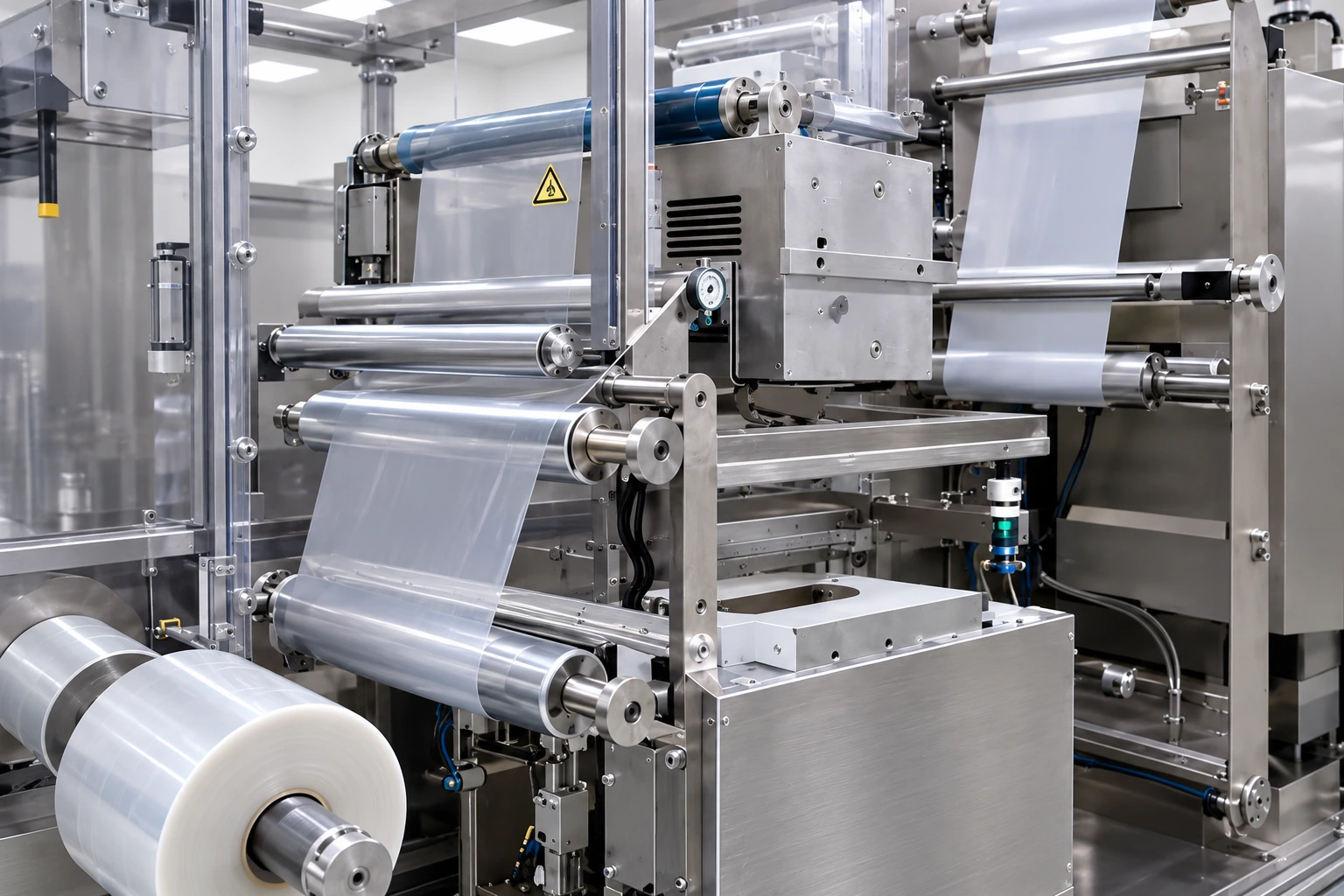
Film formation or coating creates the continuous film system. Controlled drying and machine handling then prepare it for conversion into the intended units. Slitting or cutting and individual packaging must preserve the agreed product characteristics. The illustrated equipment reference supports a machine-production narrative; it does not establish a particular speed, tolerance or output.
Inspect and release against the specification
Finished-product inspection and commercial release follow the agreed project requirements. Review film condition, packaging and the relevant quality documents before shipment. Changes to formulation, materials or processing may require further evaluation. Production capacity, settings and lead times are confirmed for the project and are not published as universal figures.
Discuss the next development step
Send your market, ingredient priorities, target serving, flavor direction and preferred packaging. We will use the brief to identify the questions that need a formulation and production review.
Send your product briefQuestions for your development brief
Are the films cut by hand?
Commercial production uses machinery for film formation, controlled drying, slitting or cutting and individual packaging. The approved formulation and process determine the production settings and quality checks.
Can I provide my own formula brief?
Yes. Share ingredient priorities, target amounts per serving, market, consumer and package preference. Identify which requirements are essential. The review assesses whether the complete formula can work as a film; it does not assume every proposed ingredient or load is feasible.
How are samples evaluated?
Agree the sample objectives before development. Review taste, mouthfeel, film appearance, handling and dissolution, then consider the intended sachet and relevant stability requirements. Record specific feedback so the next development decision is clear.
What determines MOQ and lead time?
The formulation, ingredient sourcing, package structure, print requirements, sampling work and production review affect commercial arrangements. MOQ, price and timing are project-specific; request a quotation against the reviewed brief instead of assuming fixed numbers.
Can packaging and artwork be customized?
Discuss individual sachets, cartons, pocket or trial formats and the intended sales channel. Final artwork must match the actual formula, serving and required market information. Barrier and sealing requirements are reviewed along with the film.
Tell us what you want to launch.
Send the market, format, target serving and first-order estimate. We will respond with the most practical development route.