Why Supplement Brands Are Evaluating Oral Dissolving Strips in 2026
Evaluate oral dissolving strips for your supplement brand with a practical decision matrix covering customer fit, formulation, packaging and investment.
 Start a project ↗
Evaluate oral dissolving strips for your supplement brand with a practical decision matrix covering customer fit, formulation, packaging and investment.
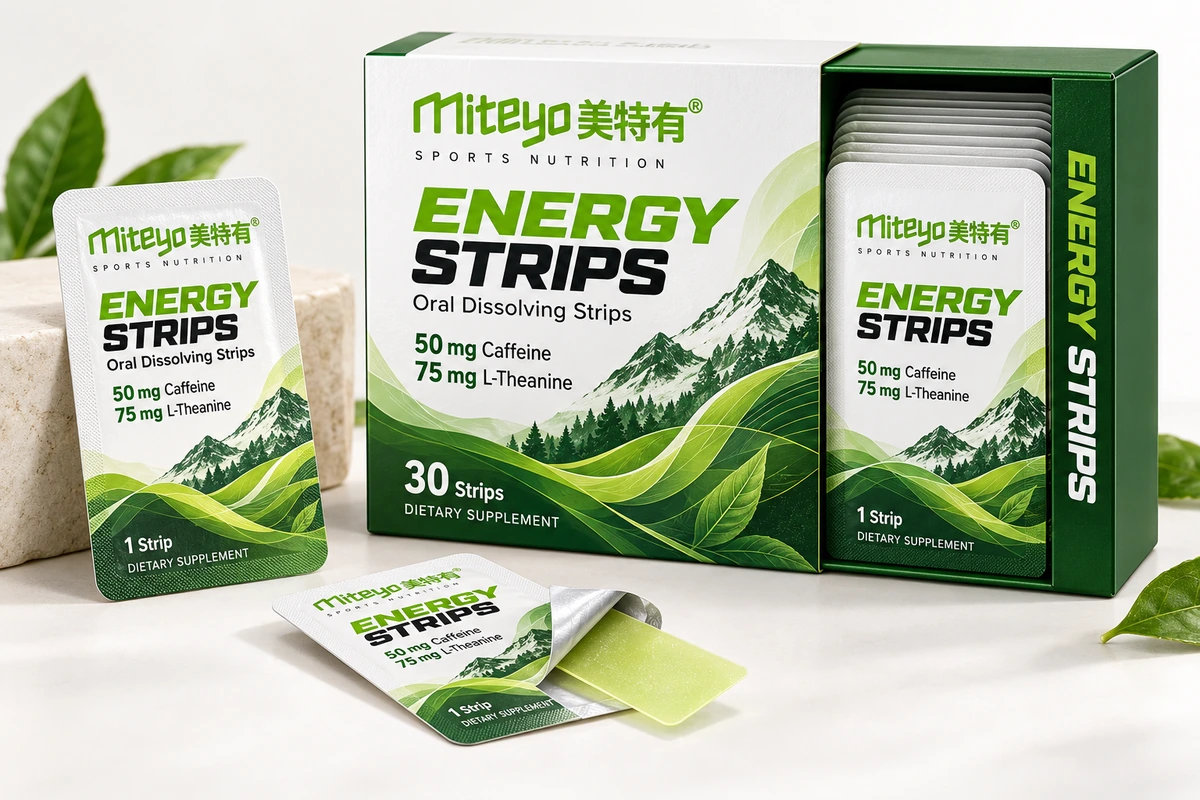
Oral dissolving strips deserve investment when a brand can connect a specific customer occasion with a feasible formula, an acceptable sensory experience and a viable retail pack. Their small, individually wrapped format can create a different way to present a supplement, but novelty alone does not establish repeat demand or commercial returns. For a 2026 product-development decision, start with the job the product must do: where it will be used, what serving it must provide, and why a customer would choose it again. Then test the assumptions before committing to a wider range. A useful first investment is a documented feasibility and customer-learning program, with explicit conditions for proceeding, revising the brief or choosing another dosage form.
A brand manager considering oral films faces two separate questions. Can the product be developed credibly, and does it solve a problem that matters to the intended customer? A positive answer to one does not establish the other. A technically workable strip may lack a reason to purchase; an appealing advertisement may describe a serving the film cannot accommodate.
The year in this article is planning context, not evidence of a newly proven market surge. We are not attaching a growth forecast or guaranteed sales outcome to oral strips. Instead, the investment question is whether your brand has an identifiable opportunity that can be tested without committing prematurely to finished inventory.
Write that opportunity as a sentence: “Our intended customer wants this type of supplement at this moment, but the existing format creates this inconvenience.” For example, a compact pack may suit a customer carrying very little during travel. That is a use-case hypothesis, not evidence that the customer will prefer a strip's taste, opening method or price.
MITEYO's oral-strip development platform connects formulation, sensory behavior and packaging review. Use that commercial hub to explore the manufacturing route; use this article to decide what evidence your own investment committee should request.
Portability is a physical attribute. Repeat purchase is a behavior. A compact package can support an attractive product story, yet the consumer still needs understandable directions, a suitable serving and an experience worth repeating.
Before design work, interview prospective customers about their current routine. Ask what they carry, when they forget a serving, how they dispose of packaging and whether opening an individual sachet feels useful or inconvenient. Avoid leading with “Would you buy this innovative format?” That question can reward novelty without exposing the practical barriers.
Energy, focus, calm, sleep and daily wellness are possible positioning directions, not automatically approved formulas or claims. Their relevance depends on the audience, ingredient selection and destination market. Do not treat a family of attractive pack names as evidence that each product belongs in a launch plan.
Consider differentiation in four concrete areas: the occasion, the sensory experience, the packaging interaction and the clarity of the offer. A brand might distinguish a product through a particular travel routine or easy-to-understand pack structure. It should not substitute an unsupported absorption statement for a meaningful customer proposition.
Document what a competing format already does well. Capsules may suit an established daily routine; powders may suit a larger serving; gummies may suit a preferred chewing experience. The purpose is not to declare a universal winner. The existing sports nutrition format comparison covers that broader choice. Here, ask which inconvenience is important enough to justify developing a new product.
Complete this matrix before requesting finished artwork. “Unknown” is an acceptable entry if it identifies the next experiment and the person responsible for resolving it.
| Decision | Evidence to collect | Proceed when | Revisit when |
|---|---|---|---|
| Customer occasion | Interviews and observation of the existing routine | A specific unmet need appears consistently | Interest depends only on novelty |
| Target serving | Ingredient brief and manufacturer feasibility response | The intended serving and format can be reconciled | The brief needs a larger format or too many units |
| Sensory acceptance | Representative samples and structured feedback | Taste and handling meet agreed criteria | Complaints recur after revisions |
| Retail pack | Opening trial, pack count and channel requirements | Customers understand use and the pack fits the channel | Packaging undermines convenience |
| Route to market | Buyer conversations and channel assumptions | A credible first channel has been identified | Distribution is only an untested hope |
| Budget | Development scope and comparable quotations | The next stage has an owner and an approved budget | Assumptions about costs remain undefined |
This is a decision tool, not a scoring system that certifies commercial success. A serious unresolved issue in one row can outweigh enthusiasm elsewhere. In particular, technical feasibility should not be averaged away by high scores for packaging appeal.
List the assumptions most likely to invalidate the project. These may include the desired active serving, tolerance for bitterness, opening convenience, destination-market ingredient suitability or an untested channel price expectation. Ask for evidence that addresses those assumptions before requesting a large assortment of decorative variations.
Allocate responsibility. The brand owns customer positioning and channel assumptions. The manufacturing discussion should establish who reviews formula feasibility, who performs each test, who supplies packaging information and who signs off the final specification. Identify any separate regulatory or laboratory work rather than assuming it is included.
Ask for an oral-film route and, when relevant, a revision or another format. Keep the customer need constant while exploring the solution. If a formula requires a substantial serving, a powder option may preserve the intended proposition better than compressing the marketing promise into an unsuitable strip.
An honest “revise” result has value. It can stop artwork, samples and commercial discussions from progressing around a premise that will not survive technical review. Record what was changed and why, so the purchasing team does not later request the original version by mistake.
A sample review should include removing a unit from the retail pack, identifying the correct variant, opening the wrapper, following the proposed directions and disposing of the empty package. Separate observations from preferences. “I could not identify the opening corner” is more actionable than “I do not like the pack.”
Do not interpret a small qualitative sample as a population-wide acceptance rate. Report the method, participants and limitations. Use the feedback to revise the brief and design the next test, rather than turning a few positive comments into a guaranteed demand claim.
A US brand and an EU brand may require different ingredient, label and claims decisions. “Europe” is not a single substitute for naming the countries where a product will be sold. Establish those destinations before deciding that the same commercial wording can appear on every pack.
FDA explains the requirements associated with structure/function claims. The European Commission maintains information on nutrition and health claims. These are starting points for a qualified market-specific review, not approval of an oral-strip project or of MITEYO's sample artwork.
If the project passes the initial screen, send MITEYO the target customer and countries, desired ingredients and serving, sensory preferences, pack-count options, first-channel plan and the unanswered questions. Identify which requirements are essential and which can change. Include your own order and launch assumptions as requests, not as commitments already accepted by a manufacturer.
The OEM/ODM development route explains the commercial discussion. Request a project-specific scope covering formulation review, sampling, packaging, applicable testing and the responsibilities required to reach a production decision. A coherent brief helps the team respond to your actual priorities.
No. A different format can support differentiation, but demand, sensory acceptance, channel execution and economics need evidence from the specific project. Do not treat market interest as a substitute for validating the customer proposition.
Not automatically. Start with a use occasion where a strip offers a credible advantage. An additional format may serve a distinct need while the existing powder, capsule or gummy remains appropriate elsewhere.
No. Disintegration describes what happens to the film. An absorption or bioavailability claim needs evidence relevant to the formulation and proposed claim; it should not be inferred from packaging or format alone.
A written feasibility response to a defined brief, including open questions, proposed sample work and the conditions that would lead to revision. An attractive pack rendering alone does not resolve those decisions.
Bring your customer occasion, target market and non-negotiable serving requirements to MITEYO. Start a Project to discuss the next evidence-gathering step. The aim is a product that fits both the buyer's commercial objective and the realities of formulation and manufacturing.