There is no single “best” format
Sports nutrition brands often start format selection from trend visibility: gummies are popular, powders are established and oral strips look new. That is the wrong order. The best dosage form depends on active load, consumer use occasion, sensory expectations, packaging, cost and the commercial story the brand wants to tell.
Powders: the strongest option for high active load
Powders remain difficult to beat when a formula requires several grams of active ingredients. Creatine, citrulline, beta-alanine, protein, carbohydrates and full electrolyte systems all benefit from the physical serving space of a powder.
Powders also allow broad flavor development and flexible serving sizes. Their disadvantage is convenience: consumers may need water, a scoop, a shaker or a bottle.
Gummies: strong consumer familiarity and sensory appeal
Gummies provide an approachable daily-use experience and strong visual merchandising. They work especially well when the active load can be divided across a practical number of pieces.
The limitation is that gummies are not infinitely loadable. Large quantities of creatine, amino acids or minerals can create texture, taste and serving-count problems. A credible gummy project should start with manufacturing feasibility rather than a marketing wish list.
Oral strips: strongest when portability is the product story
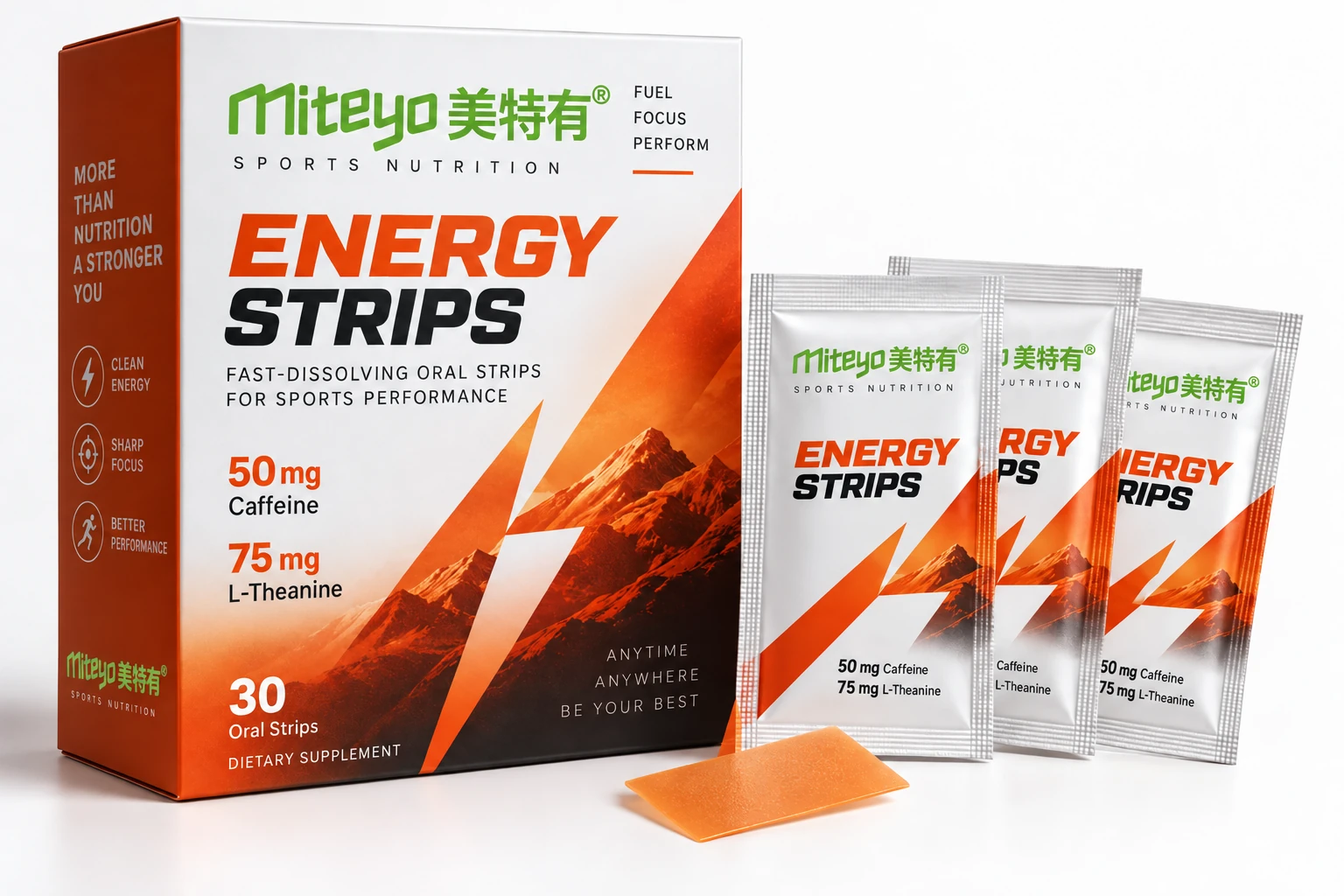
Oral strips have the lowest active-load capacity of the three formats, but they offer the most distinctive portability story. A strip can be individually packed, carried in a pocket and used without mixing.
That makes them suitable for compact energy, focus, light hydration-support and selected performance concepts. The format becomes weak when brands try to replicate gram-level powders.
A practical comparison
Powder is usually the first choice for high-dose efficacy-driven formulas. Gummies are a strong choice for daily adherence and sensory-led retail products. Oral strips are strongest when differentiation, portability and a specific use occasion are central to the launch.
A brand can also use the formats together rather than choosing only one. For example, a pickleball system could use a hydration powder as the high-load core product and an energy or focus strip as a portable add-on.
Questions to answer before selecting a format
Ask:
1. What is the minimum commercially meaningful amount of each active?
2. Does the serving require milligrams or grams?
3. Will the consumer use the product daily or only at specific moments?
4. Does the product require water?
5. How important is flavor and texture?
6. What retail price and margin are required?
7. What packaging experience fits the brand?
8. What market claims are supportable?
9. What shelf-life and moisture protection are required?
10. Is the format itself part of the differentiation strategy?
A better OEM/ODM workflow
The most efficient workflow is to define the target consumer and use occasion first, then determine the required active load, and only then select the dosage form. This avoids costly reformulation after sampling and reduces the risk of launching a product that looks distinctive but has weak formulation logic.
MITEYO can develop multi-format systems
MITEYO supports sports nutrition programs across powders, stick packs, gummies and emerging formats. When a brand is building a product system rather than one isolated SKU, different dosage forms can be assigned to the use occasions they serve best.