
Oral Strip Stability and Shelf-Life Development
Oral-strip shelf life depends on the actual formula, film properties, packaging barrier and storage environment. Moisture can affect brittleness or stickiness, while ingredients and flavor may change over time. Accelerated and real-time stability work should be planned for the finished system. No universal shelf life can be assigned to all oral strips from the format alone.
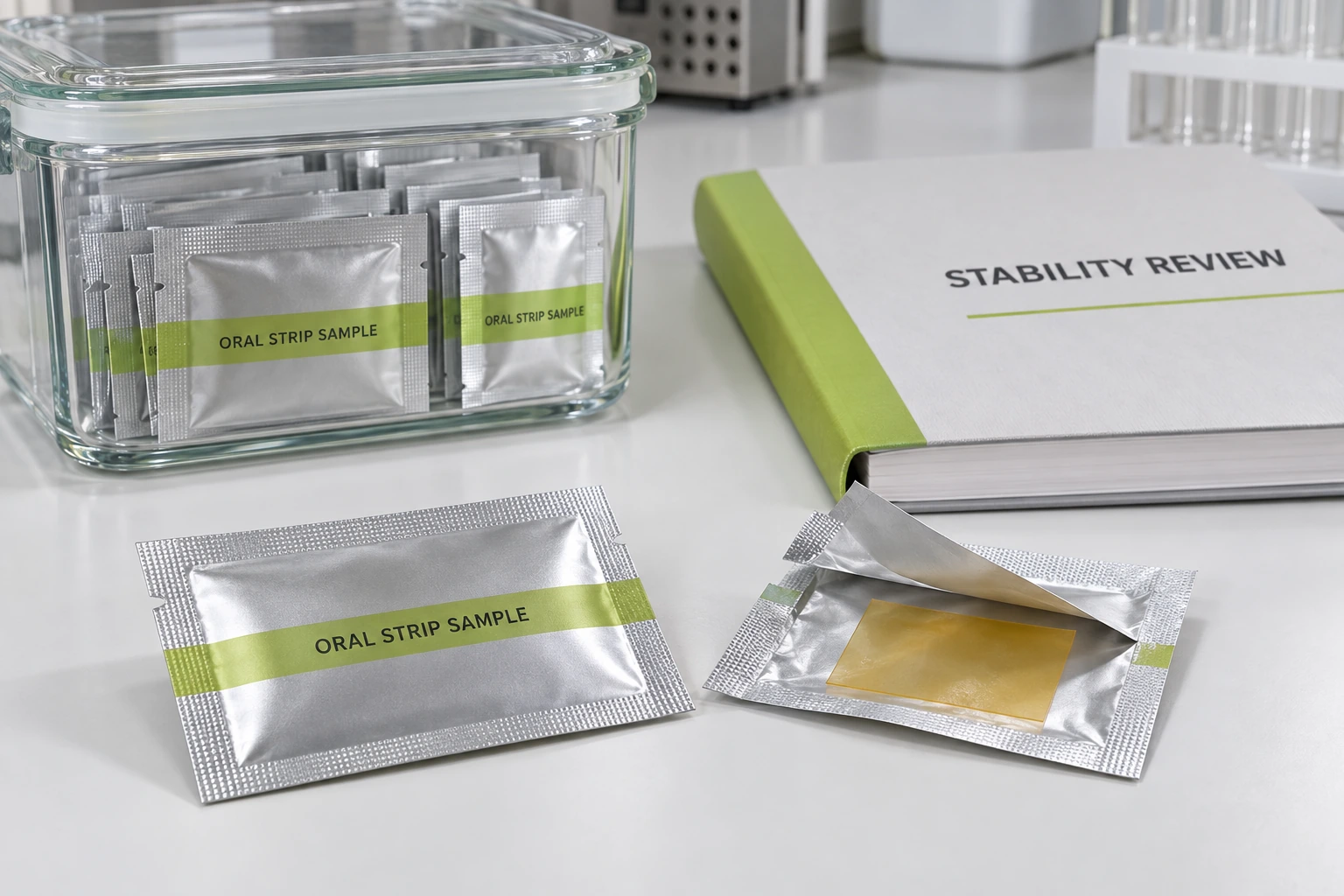
What affects oral-strip shelf life?
Oral-strip shelf life depends on the actual formula, film properties, packaging barrier and storage environment. Moisture can affect brittleness or stickiness, while ingredients and flavor may change over time. Accelerated and real-time stability work should be planned for the finished system. No universal shelf life can be assigned to all oral strips from the format alone.
Define the risks for the formula
Review moisture exposure, film integrity, ingredient degradation, flavor changes and package performance. A brittle or sticky film can present handling issues even when its appearance seems acceptable. The relevant stability characteristics depend on the active system and materials, so the plan should identify what is monitored and why.
Test the finished package
The sachet barrier and seal are part of the product system. Evaluate the intended materials and storage conditions rather than testing only an unpackaged film. Where relevant, consider oxygen and light protection as well as moisture. Transport and distribution requirements should inform the commercial package review.
Establish evidence before label claims
Accelerated work can support development decisions, while real-time evaluation contributes evidence under the defined storage conditions. Acceptance criteria, duration and interpretation belong to the project-specific plan. Do not copy shelf-life statements from another formula or infer them from a generic packaging image; changes to formula or packaging may require reassessment.
Discuss the next development step
Send your market, ingredient priorities, target serving, flavor direction and preferred packaging. We will use the brief to identify the questions that need a formulation and production review.
Send your product briefQuestions for your development brief
Can one stability result cover all flavors?
Not automatically. Flavor or ingredient changes may affect film behavior and degradation pathways. The applicability of existing evidence needs review against the revised formulation, package and storage conditions.
Can I provide my own formula brief?
Yes. Share ingredient priorities, target amounts per serving, market, consumer and package preference. Identify which requirements are essential. The review assesses whether the complete formula can work as a film; it does not assume every proposed ingredient or load is feasible.
How are samples evaluated?
Agree the sample objectives before development. Review taste, mouthfeel, film appearance, handling and dissolution, then consider the intended sachet and relevant stability requirements. Record specific feedback so the next development decision is clear.
What determines MOQ and lead time?
The formulation, ingredient sourcing, package structure, print requirements, sampling work and production review affect commercial arrangements. MOQ, price and timing are project-specific; request a quotation against the reviewed brief instead of assuming fixed numbers.
Can packaging and artwork be customized?
Discuss individual sachets, cartons, pocket or trial formats and the intended sales channel. Final artwork must match the actual formula, serving and required market information. Barrier and sealing requirements are reviewed along with the film.
Tell us what you want to launch.
Send the market, format, target serving and first-order estimate. We will respond with the most practical development route.