
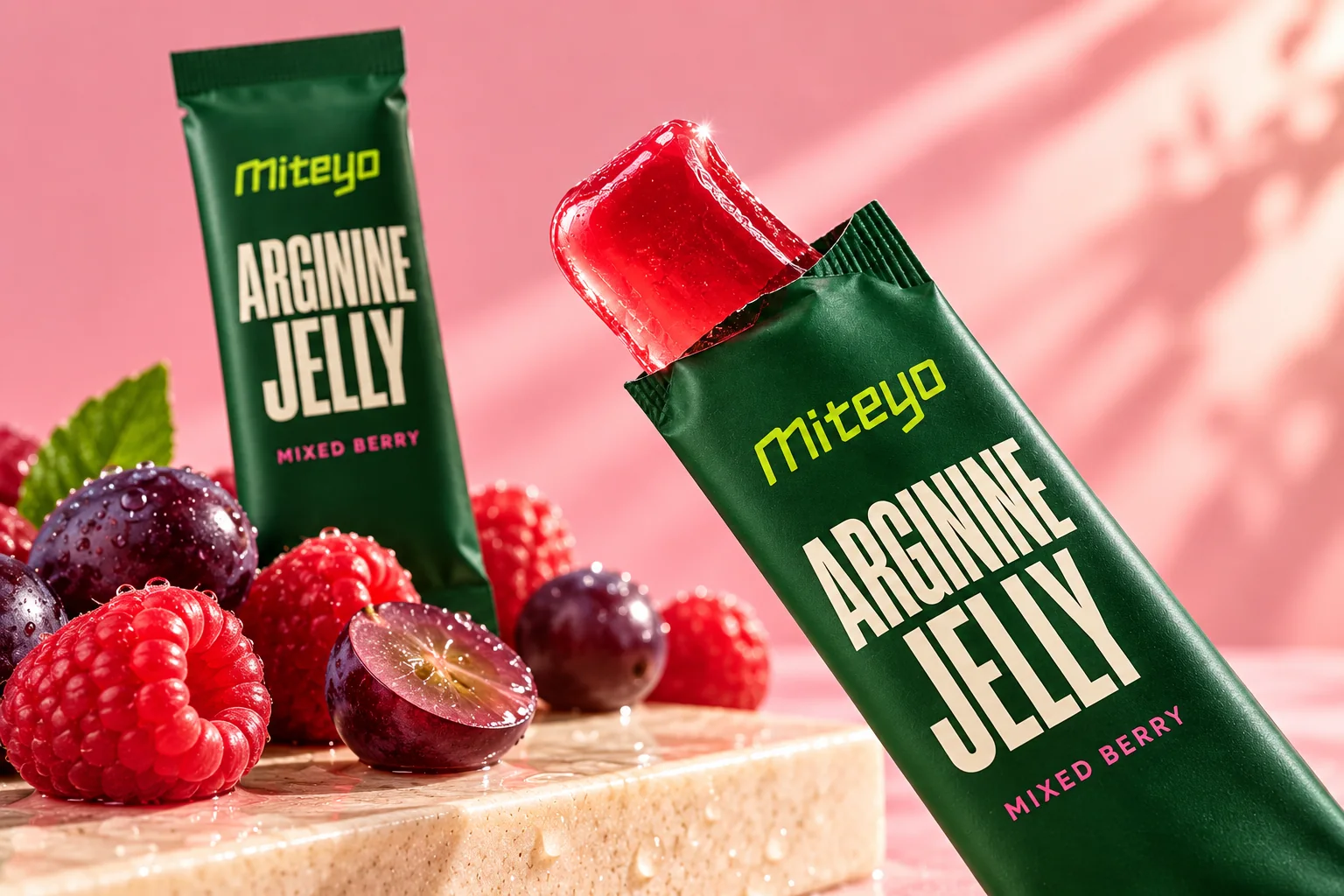
Choose an arginine concept or a defined amino-acid blend
“Amino-acid jelly” is too broad for a supplier to quote accurately. State whether the concept centers on L-arginine, a specified essential amino-acid blend or another clearly identified ingredient system. Ask for the ingredient form and composition, not just a trade name or the total mass of a proprietary blend.
Use a proposed 20–30g net jelly fill and specify the intended daily routine separately. Record active mass per stick, active mass per daily serving and the basis on which each will be tested. If a salt or compound is proposed, ask how the declared active amount is calculated. The fill weight must not become the headline active claim.
Keep sports positioning within the evidence
Arginine is associated with nitric-oxide biology, but a biochemical role does not demonstrate a finished-product performance benefit. NIH ODS describes limited and conflicting evidence for arginine supplementation as a way to improve athletic performance. That is a reason to review proposed claims carefully, not to promise a stronger effect from a jelly delivery format.
EXTREME’s official arginine jelly listing is a useful market-format reference. It is not evidence that a new formula has the same composition, benefits, sales or consumer acceptance. Keep the initial buying brief focused on a portable sports nutrition routine and assess any specific claim against the exact ingredient, amount, population and destination market.
Run taste and texture trials with the intended active load
Evaluate the actual active-containing jelly alongside a base reference. A pleasant base sample cannot resolve the taste, acidity or mouthfeel of the intended formula. Use coded samples and a fixed feedback form so reviewers can compare initial taste, aftertaste, firmness, stick release and residue without relying on a single “tastes good” verdict.
Ask the development team to explain proposed adjustments to the gelling system, pH, flavor and sweetness. Record which changes were made and retest the resulting sample. If additional amino acids or other actives are introduced, reopen the sensory and analytical review rather than assuming the original acceptance still applies.
Turn sample feedback into an approval specification
A useful sample approval has a formula revision, batch reference and agreed test scope. Ask for ingredient identity documentation, a suitable finished-product assay plan, uniformity sampling and proposed stability checkpoints. Arrange safety and labeling review for the intended users and use instructions rather than treating an ingredient’s market presence as universal suitability.
Check the unopened stick after the proposed storage and transport trials: appearance, separation, odor, seal condition and ease of opening. Define whether feedback triggers a reformulation, another pilot or a stop decision. An attractive first bench sample is a starting point for validation, not evidence of a validated production process.
Buyer checklist before sample approval
- Identify the amino-acid system and document each ingredient form and composition.
- Separate proposed 20–30g net fill from active amounts and intended daily stick count.
- Approve coded sensory trials made with the intended active-containing formula.
- Request appropriate identity, active-content and uniformity testing with sample traceability.
- Review proposed claims, use instructions and ingredient suitability for the target market.
- Agree stability, microbial and package criteria before commercial sample sign-off.
Frequently asked questions
Can an arginine jelly guarantee a better workout?
No. A delivery format and an ingredient mechanism do not establish a guaranteed performance outcome. Claims need evidence and review for the actual product and market.
Are arginine and an EAA blend interchangeable?
No. They have different compositions and commercial briefs. Identify the precise amino-acid system, proposed serving and intended positioning before asking for samples.
Should flavor be selected before the active amount?
Set a provisional ingredient and serving brief first, then iterate flavor and texture with the active-containing sample. Flavor approval on an empty base alone is insufficient.
References and scope of evidence
References reviewed 21 October 2026. Brand listings document market examples only; they do not establish sales volume, clinical efficacy or MITEYO capabilities. Research findings apply to their studied ingredients, populations and conditions, not automatically to a proposed finished jelly.
- NIH ODS: Dietary Supplements for Exercise and Athletic Performance
- EXTREME: arginine jelly stick product listing