
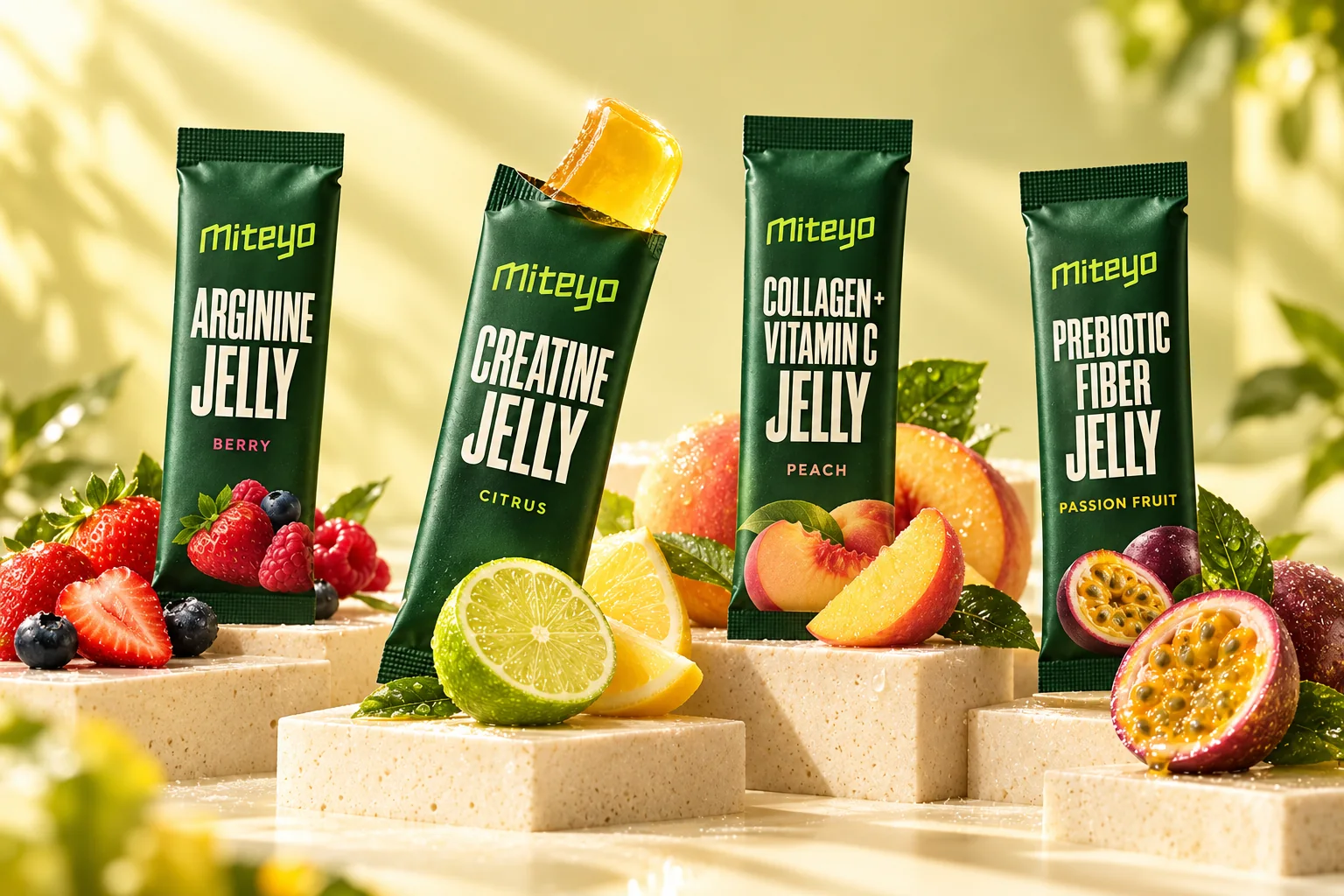
Define the physical product before choosing ingredients
A useful request for quotation describes a soft, cohesive, spoonable or squeezable jelly with an agreed bite and release from the pack. Send a texture reference and describe firmness, water separation, residue and ease of opening. Use “20–30g net jelly per stick” in the brief so suppliers do not interpret the request as an endurance energy gel or a powder stick pack.
Net weight includes water, the gelling system, flavor ingredients and other formulation components. Active content needs its own units, analytical basis and daily serving. Twenty-five grams of finished jelly does not mean twenty-five grams of amino acids, collagen or fiber. Decide whether the routine uses one stick or multiple sticks before comparing cost per day.
Give each concept a separate buying decision
Arginine or amino-acid jelly can lead a sports-oriented development discussion, with taste and evidence review as early gates. Creatine jelly deserves a separate sampling program focused on retained creatine through processing and storage. Neither direction should be described as a proven marketplace bestseller without suitable evidence.
Collagen plus vitamin C is a possible Active Wellness extension with a proposed 20–25g fill. A fiber jelly brief can start around a proposed 25g fill and focus on ingredient identity, tolerance and labeling. Electrolyte jelly and magnesium plus theanine jelly can remain later feasibility topics rather than launch-ready or high-selling products.
Use market examples for format learning
EXTREME lists an arginine jelly stick, BB LAB lists a 20g collagen jelly, and FOODOLOGY and Herbaland offer jelly categories or products. These official listings show that brands use jelly as a commercial format. They do not establish demand for every ingredient direction, verified sales rankings or the ability of another manufacturer to reproduce a formulation.
Compare pack opening, portion size, texture language and consumer occasion. Do not copy competitor ingredient levels, benefit promises or certifications into your own specification. Long-lived sourcing content should remain useful without transient Amazon or TikTok counters.
Compare quotations on a common development scope
Ask each supplier to separate formulation work, bench samples, pilot work, analytical testing, stability work and packaging tooling. Obtain proposed minimum order quantities and timing for the actual formula and wrapper, rather than transferring a minimum from gummies or powders. Identify who owns the specification and what happens if a sample fails.
Before a production decision, request the proposed manufacturing site, applicable certificate scope, batch traceability plan, test methods and packaging evidence. A certificate for a different dosage form or site does not answer the jelly project’s qualification questions. For a U.S. project, request food-contact documentation that identifies the materials and applicable regulatory basis for the actual jelly, contact duration and temperature conditions, including filling and storage. FDA explains that authorization depends on substance identity, specifications and conditions of use; an applicable FCN also depends on the identified manufacturer. Do not accept a blanket “FDA-approved packaging” claim as a substitute for this intended-use review. Set a written change-control process for ingredients, processing and the primary pack.
Buyer checklist before sample approval
- Record proposed net fill weight, texture reference, intended users, daily stick count and sales market.
- List each active separately with ingredient form, proposed amount and measurement basis.
- Agree sensory acceptance criteria: bite, flavor, aftertaste, water separation, residue and opening.
- Obtain a project-specific process, microbial safety, stability and packaging verification plan.
- Compare development costs, testing responsibilities, packaging quantities and quote exclusions.
- Approve evidence and artwork before a commercial order; keep unresolved gates visible.
Frequently asked questions
Is a jelly stick the same as an energy gel?
For this development brief, no. The target is a true jelly with an agreed gelled texture. An endurance fuel gel is a different product brief and should not be substituted during sampling.
Can all four concepts use one base and one shelf life?
That must be demonstrated. Ingredient changes can affect texture, flavor, processing and stability. A shared wrapper or visual identity does not validate a shared formula or shelf life.
Does a development guide confirm supply or MOQ?
No. Request a project-specific feasibility review and written quotation. The proposed fill ranges here do not establish a finished SKU, available stock, certification or production minimum.
References and scope of evidence
References reviewed 21 October 2026. Brand listings document market examples only; they do not establish sales volume, clinical efficacy or MITEYO capabilities. Research findings apply to their studied ingredients, populations and conditions, not automatically to a proposed finished jelly.
- EXTREME: arginine jelly stick product listing
- BB LAB: Collagen Tangle Up Jelly, 20g sticks
- FOODOLOGY: Coleology Bowel Movement Jelly
- Herbaland: Jelly Sticks category
- FDA: Regulatory status of food-contact material components